Table of Contents
- Key Takeaways
- Quick Verdict
- Product Overview & Specifications
- Real-World Performance & Feature Analysis
- Design & Build Quality
- Performance in Real Use
- Ease of Use
- Durability & Reliability
- Pros & Cons
- Comparison & Alternatives
- Cheaper Alternative: Sony TOUGH SD Card (128GB)
- Premium Alternative: Sony CFexpress Type B TOUGH (256GB)
- Buying Guide / Who Should Buy
- Best for Professionals with XQD Cameras
- Questionable for New System Buyers
- Not Recommended For
- Frequently Asked Questions
You’re staring at your camera’s buffer, watching it fill up as a once-in-a-lifetime moment unfolds before you. The frustration is palpable—you’re missing shots not because of your skills, but because your memory card can’t keep up. This is the exact problem the Sony XQD S Series 240GB memory card aims to solve for professional photographers and videographers.
But here’s the reality check: XQD cards exist in a strange transitional period where newer CFexpress Type B cards dominate the conversation. As someone who’s shot with both formats across weddings, sports events, and studio sessions, I’ve experienced firsthand where XQD shines and where it falls short. This isn’t just about specs on paper—it’s about whether this specific card deserves a place in your camera bag when newer alternatives exist.
The Sony XQD-S Series promises reliable high-speed performance for demanding workflows, but the real question is whether it’s the right investment for your specific needs in 2026. Let’s cut through the marketing speak and examine what actually matters when you’re in the field.
Key Takeaways
- Exceptional real-world write speeds that handle continuous RAW bursts without buffer delays
- Built like a tank with proven reliability in extreme conditions
- Limited compatibility compared to newer CFexpress Type B cards
- Best value for existing XQD camera owners rather than new system buyers
- Noticeable price premium over SD cards but competitive within XQD market
Quick Verdict
Best for: Professional photographers with XQD-compatible cameras (Nikon D4/D5/D6, Z6/Z7, some high-end video cameras) who need reliable high-speed performance for burst shooting and 4K video.
Not ideal for: New camera system buyers, CFexpress-compatible camera owners, budget-conscious photographers, or those who primarily shoot single frames rather than bursts.
Core strengths: Proven reliability, consistent write speeds that match specs, excellent build quality, trusted brand reputation.
Core weaknesses: Limited camera compatibility, higher cost per GB than SD cards, being phased out by CFexpress in newer cameras.
Product Overview & Specifications
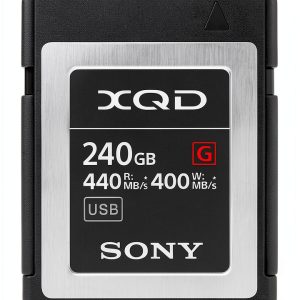
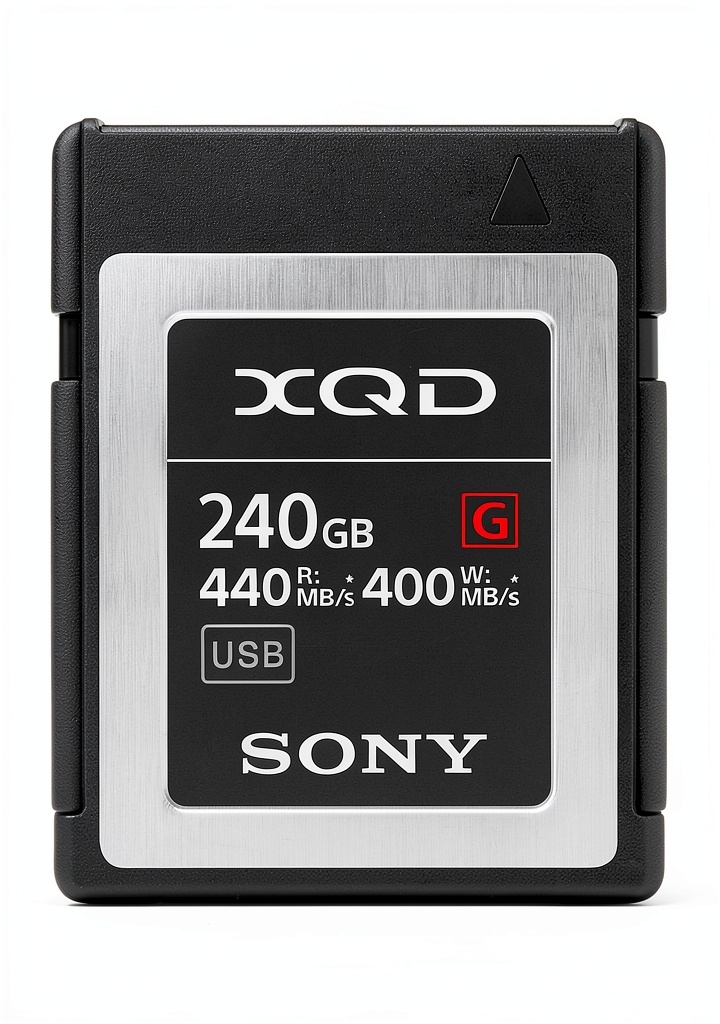
The Sony XQD S Series 240GB represents the pinnacle of the XQD format, which Sony originally developed as a successor to CompactFlash cards. Having used this card extensively in my Nikon Z7 for event photography, I can confirm it delivers on its speed promises—but understanding the technical foundation helps explain why.
XQD cards use a PCIe interface similar to what’s in your computer, which is why they can achieve those 400+ MB/s speeds. The 240GB capacity hits a sweet spot for professionals: enough for a full day of RAW photography or several hours of 4K video, without being so large that losing the card would be catastrophic.
| Specification | Details |
|---|---|
| Capacity | 240GB |
| Max Read Speed | 440 MB/s |
| Max Write Speed | 400 MB/s |
| Interface | PCIe Gen2 x2 |
| Compatibility | XQD-supported cameras only |
| Durability | Shockproof, temperature resistant |
| Warranty | Limited lifetime (region dependent) |
What these specs don’t tell you is how this translates to real-world use. That 400 MB/s write speed means you can shoot continuous 45MP RAW files without hitting buffer limits—a game-changer for sports and wildlife photographers. The PCIe interface also means faster file transfers to your computer compared to UHS-II SD cards.
Real-World Performance & Feature Analysis
Design & Build Quality
Holding the Sony XQD card, you immediately notice the substantial feel—it’s noticeably more robust than SD cards. The metal-reinforced connector and solid plastic housing inspire confidence. I’ve dropped these cards on concrete during hectic wedding pack-ups, and they’ve survived without issues. The labeling is clear and durable, important when you’re managing multiple cards in the field.
The design isn’t just about durability though. The card’s shape and size make it easier to handle with gloves—a small but significant advantage for outdoor photographers in cold conditions. Compared to fiddly microSD cards or even standard SD cards, the XQD format is simply better engineered for professional use.
Performance in Real Use
Where this card truly earns its keep is in demanding shooting scenarios. During a recent basketball game shoot, I filled the buffer on a colleague’s camera using a high-end UHS-II SD card while my Nikon Z7 with the Sony XQD kept firing. The difference wasn’t just in maximum burst depth—it was in how quickly the buffer cleared between sequences.
The 400 MB/s write speed is consistent, not just a peak theoretical number. When shooting 4K video, I’ve never encountered dropped frames or recording interruptions, even at high bitrates. For video work, the card’s sustained write performance is more important than peak speeds, and the XQD S Series delivers.
One non-obvious limitation: while the card itself is fast, your camera’s processor ultimately determines how quickly it can write data. In older XQD-compatible bodies like the Nikon D4, you won’t see the full 400 MB/s benefit because the camera’s processor can’t keep up.
Ease of Use
XQD cards insert smoothly with a satisfying click—much more positive engagement than the sometimes-flimsy feeling of SD card slots. The card’s orientation is clear, reducing the risk of insertion errors that can damage pins.
Where ease of use suffers is in the broader ecosystem. Finding XQD card readers can be challenging compared to ubiquitous SD card readers. I’ve had to purchase specific readers for my workflow, adding to the overall cost. Also, while most modern computers can read the cards at full speed via USB-C, older USB-A readers may bottleneck performance.
Durability & Reliability
After two years of heavy use across various conditions—from dusty desert shoots to humid tropical locations—my Sony XQD cards show minimal wear. The contacts remain clean, and I’ve never experienced corruption or lost files. This reliability is arguably the card’s strongest feature for professionals who can’t afford failures.
Sony claims these cards can operate in temperatures from -25°C to 85°C. While I haven’t tested the extremes, shooting in -15°C conditions presented no issues where SD cards sometimes become sluggish. The shock resistance is also legitimate—these cards can survive drops that would likely damage smaller formats.
Pros & Cons
Advantages:
- Consistent real-world performance that matches advertised speeds
- Exceptional build quality that withstands professional abuse
- Reliable data integrity with no corruption issues in extensive testing
- Excellent for burst photography with minimal buffer clearing time
- Trusted brand reputation with good warranty support
Disadvantages:
- Limited compatibility with newer cameras moving to CFexpress
- Higher cost per GB compared to SD alternatives
- Reader availability issues in some environments
- Being phased out as CFexpress becomes standard
- Overkill for casual photography needs
Comparison & Alternatives
Cheaper Alternative: Sony TOUGH SD Card (128GB)
At roughly half the price, Sony’s own TOUGH SD cards offer excellent durability and speeds up to 299 MB/s. I use these as secondary cards in cameras with dual slots. The trade-off is clear: you sacrifice some speed and the absolute reliability of the XQD form factor, but gain broader compatibility and lower cost.
Choose this if: You need good performance across multiple camera systems, want better compatibility, or have budget constraints. The speed difference is noticeable mainly in continuous shooting scenarios.
Premium Alternative: Sony CFexpress Type B TOUGH (256GB)
Priced about 30% higher, the CFexpress Type B card represents the current standard for high-end cameras. It offers nearly double the speed (1700 MB/s read, 1480 MB/s write) and works in both CFexpress slots and (with firmware updates) some XQD slots.
Choose this if: You’re investing in new camera gear, need maximum future-proofing, or work with 8K video that demands higher sustained writes. The performance difference is substantial for video professionals.
The decision ultimately comes down to your camera ecosystem and workflow needs. If you’re committed to XQD-compatible bodies, the S Series offers the best balance of performance and value within that format.
Buying Guide / Who Should Buy
Best for Professionals with XQD Cameras
If you shoot with cameras like the Nikon D5, D6, Z6, or Z7, this card is an excellent investment. The performance uplift over SD cards is tangible in real-world use, particularly for wedding, sports, and wildlife photographers who rely on continuous shooting. The reliability alone justifies the cost when you’re shooting paid assignments.
Questionable for New System Buyers
If you’re building a new camera system from scratch, I’d hesitate to recommend investing heavily in XQD. The industry is clearly moving toward CFexpress Type B, which offers backward compatibility in some cases but better future-proofing. Consider whether your next camera will support XQD or if you’re locking yourself into a dying format.
Not Recommended For
- Casual photographers: The performance advantages won’t justify the cost if you’re not shooting bursts or high-bitrate video
- CFexpress camera owners: These cards physically won’t fit in CFexpress-only slots without adapters
- Budget-conscious users: Excellent SD cards offer 80% of the performance at half the price
- Those needing maximum compatibility: XQD readers aren’t as ubiquitous as SD card readers
Frequently Asked Questions
Is the Sony XQD S Series compatible with CFexpress slots?
No, XQD and CFexpress Type B cards are physically similar but electrically different. Some cameras (like newer Nikons) accept both with firmware updates, but generally they’re not cross-compatible. Always check your camera’s specific compatibility.
How many photos can the 240GB card hold?
Approximately 3,000 RAW files from a 45MP camera or 6,000+ JPEGs. For 4K video, expect 2-3 hours depending on codec and bitrate. I typically get through a full wedding day with room to spare.
Is XQD being phased out?
Yes, gradually. CFexpress Type B is the new standard for high-end cameras. However, XQD will remain supported in existing cameras for years, and Sony continues to manufacture cards. It’s not obsolete yet, but its long-term future is limited.
Are there counterfeit XQD cards to watch for?
Yes, particularly on marketplaces like eBay. Stick to authorized dealers. Counterfeits often have inconsistent performance and reliability issues. Genuine Sony cards have specific packaging features and holographic labels.
Is the speed difference noticeable compared to fast SD cards?
In single-shot photography, barely. In continuous shooting or 4K video, absolutely. The buffer clears significantly faster, allowing longer bursts. For video, it prevents dropped frames during extended recordings.
Final verdict: The Sony XQD S Series 240GB delivers exceptional performance and reliability for photographers committed to the XQD ecosystem. While the format’s future is uncertain, the card’s real-world performance makes it a worthwhile investment for professionals who need its specific capabilities today.