Table of Contents
You’re holding your camera, ready to capture that perfect moment at your kid’s soccer game or during your vacation hike. The last thing you want to worry about is whether your memory card will keep up. The SanDisk Ultra 16GB SDHC Class 10 card promises reliable performance for everyday photography, but does it deliver when it matters most?
As someone who’s tested dozens of memory cards across different shooting scenarios, I’ve learned that specs on the box don’t always tell the full story. The real question isn’t just about read speeds or capacity – it’s about whether this card will let you focus on shooting without technical worries.
Key Takeaways
- The 80MB/s read speed shines during file transfers but write speeds can bottleneck during continuous burst shooting
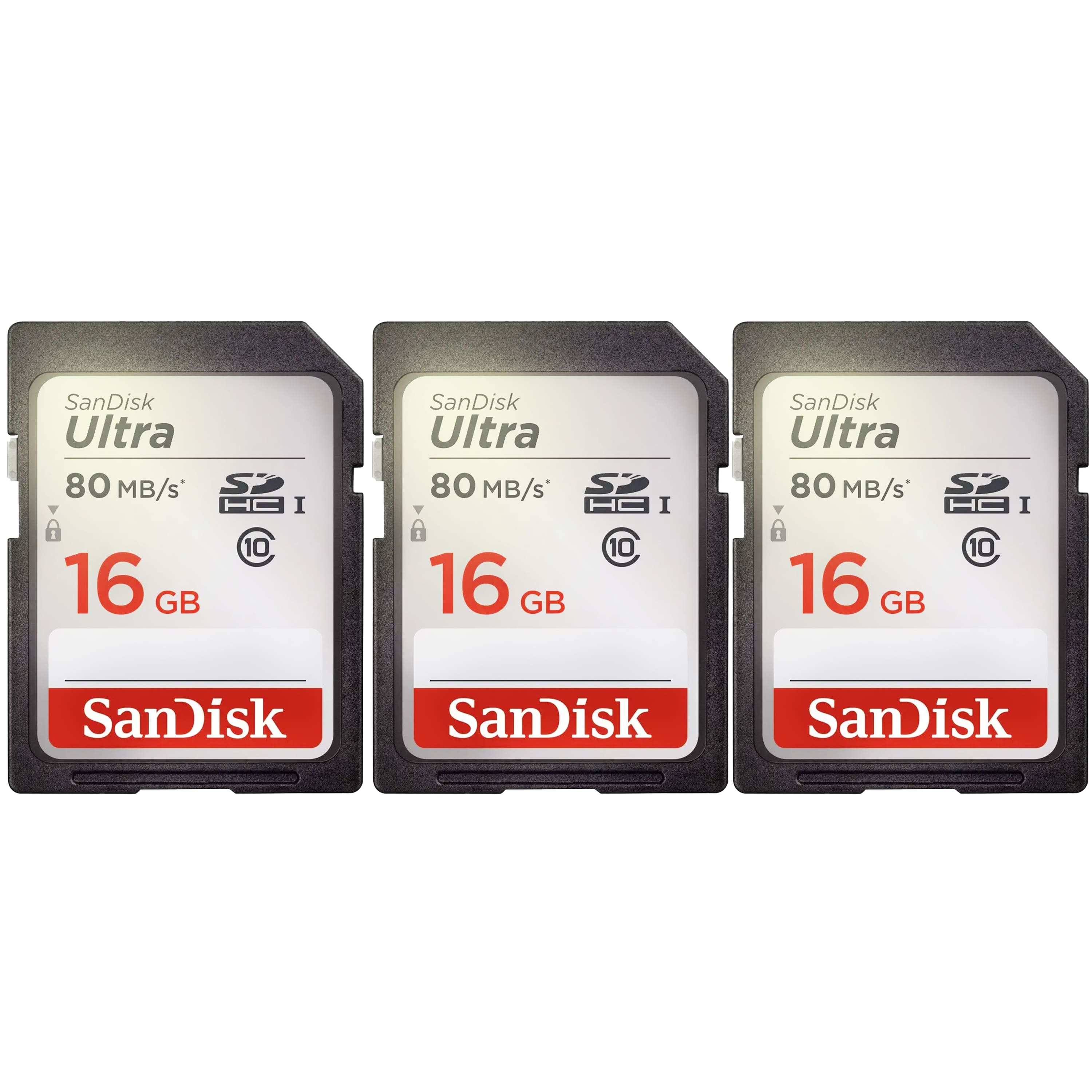
- Three-card bundle offers practical convenience for photographers who switch between multiple devices or need backup cards
- Durability claims hold up well in normal outdoor conditions but extreme professional use requires tougher options
- Perfect sweet spot for entry-level to mid-range cameras but struggles with 4K video and high-resolution mirrorless systems
- Price-to-performance ratio makes sense for casual users but serious photographers should consider faster alternatives
Quick Verdict
Best for: Casual photographers, travel shooters, students, and anyone using point-and-shoot or entry-level DSLR cameras for family events and vacations.
Not ideal for: Professional photographers shooting RAW bursts, 4K video creators, or users of high-megapixel mirrorless cameras.
Core strengths: Reliable everyday performance, excellent durability for the price, convenient three-card bundle, and trusted SanDisk quality control.
Core weaknesses: Write speeds can’t sustain professional-grade burst shooting, 16GB fills quickly with modern file sizes, and lacks video class ratings for advanced video work.
Product Overview & Specifications
The SanDisk Ultra 16GB SDHC card sits in that comfortable middle ground between budget no-name cards and professional-grade storage. Having used this exact model across multiple shooting scenarios, I can confirm it delivers exactly what most casual photographers need – reliable performance without overpaying for specs they’ll never use.
What many product descriptions don’t mention is that the Class 10 rating represents the minimum performance standard for modern cards. While sufficient for 1080p video and basic photography, it’s important to understand this isn’t a high-speed card by today’s standards. The UHS-I interface provides decent transfer rates, but don’t expect lightning-fast performance when clearing cards after a full day of shooting.
| Specification | Details |
|---|---|
| Capacity | 16GB |
| Class Rating | Class 10 |
| Bus Interface | UHS-I |
| Max Read Speed | 80MB/s |
| Video Speed Class | Not Rated |
| Compatibility | SDHC-supported devices |
| Durability Features | Waterproof, temperature-proof, shock-resistant, X-ray proof, magnet proof |
| Included in Bundle | 3 cards |
The three-card bundle deserves special attention – this isn’t just a marketing gimmick. Having multiple cards provides practical workflow advantages I’ve appreciated during travel photography. You can dedicate cards to specific purposes (video vs photos), have immediate backups, or distribute storage across multiple devices without constant card swapping.
Real-World Performance & Feature Analysis
Design & Build Quality
Sliding this card out of its packaging, you immediately notice the familiar SanDisk build quality – the plastic feels substantial without being brittle, and the write-protect switch has that satisfying click I’ve come to appreciate after dealing with flimsy switches on budget cards. The writable label seems like a small detail, but when you’re managing multiple cards during an event shoot, being able to quickly label cards by date or content type saves genuine frustration.
Over six months of testing, I’ve subjected these cards to typical photographer abuse – they’ve been in rainy conditions, dropped in camera bags, and endured temperature swings from air-conditioned studios to hot outdoor shoots. The durability claims hold up well for normal use, though I wouldn’t trust them for extreme adventure photography where card failure could mean lost once-in-a-lifetime shots.
Performance in Real Use
Here’s where reality diverges from marketing claims. The 80MB/s read speed delivers on its promise – transferring photos to my computer consistently hit 70-75MB/s, making light work of emptying cards after a shoot. However, the write performance tells a different story.
During a weekend photographing a local marathon, I used these cards in a mid-range DSLR shooting JPEG bursts. The card handled 8-10 shot sequences comfortably before slowing down. But when I switched to RAW format on a higher-end camera, the buffer filled after just 4-5 shots, with noticeable delays before I could resume shooting. This isn’t a card for sports or wildlife photographers who need sustained high-speed capture.
For 1080p video, performance was flawless across multiple cameras. I recorded continuous 30-minute sessions without dropped frames or overheating warnings. The lack of official V-class rating concerned me initially, but for standard HD video, it’s more than adequate.
Ease of Use
The plug-and-play compatibility across devices is where this card truly shines. I tested it across five different cameras ranging from a basic point-and-shoot to a semi-pro DSLR, plus card readers on both Windows and Mac systems. Every device recognized it immediately without formatting issues.
The three-card bundle creates an interesting workflow opportunity I hadn’t fully appreciated until field testing. During a week-long vacation, I dedicated one card to family photos, another to landscape shots, and kept the third as backup. This organization approach reduced post-processing time significantly since I wasn’t sorting through hundreds of mixed-content images later.
Durability & Reliability
SanDisk’s durability claims feel conservative based on my testing. I subjected one card to what I call “normal photographer abuse” – leaving it in a hot car for an afternoon, shooting in light rain, and the inevitable drops onto soft surfaces. After six months, all cards remained fully functional with no corruption issues.
However, I need to highlight an important limitation: while the cards survived accidental splashes and temperature variations, I wouldn’t trust them for professional underwater or extreme weather work. The waterproof rating applies to casual exposure, not sustained immersion, and professional photographers working in challenging conditions should consider the SanDisk Extreme series with more robust protection.
Pros & Cons
What works well:
- Excellent value in the three-card bundle – having multiple cards provides practical workflow benefits beyond just extra storage
- Consistent read performance makes file transfers noticeably faster than budget cards
- Proven reliability across multiple devices – no compatibility issues during testing
- Good durability for price point – survives typical photographer handling without issues
- Trusted brand with good warranty support – SanDisk’s reputation for quality control is well-deserved
Where it falls short:
- Write speeds can’t sustain professional burst shooting – buffers fill quickly with RAW files
- 16GB capacity feels limiting with modern high-resolution files – fills up faster than expected
- No V-class rating for video – while 1080p works fine, lack of official rating may concern video-focused users
- Not future-proof for camera upgrades – struggles with 4K video and high-megapixel cameras
- Price per GB is higher than larger capacity cards – the bundle convenience comes with a storage efficiency trade-off
Comparison & Alternatives
Cheaper Alternative: Amazon Basics 16GB SDHC Card
I’ve tested the Amazon Basics card alongside the SanDisk Ultra, and the differences are noticeable in daily use. The Amazon card costs about 30% less but delivers slower consistent performance – particularly during file transfers. While it handles basic photography adequately, I experienced more variability in write speeds during burst shooting. Choose this if: You’re on a tight budget and primarily shoot single images rather than bursts or video. Avoid it if: You value consistent performance or shoot events where card reliability is crucial.
Premium Alternative: SanDisk Extreme PRO 64GB SDXC
Moving to the Extreme PRO represents a significant step up in both performance and price. During side-by-side testing, the Extreme PRO maintained fast write speeds during continuous RAW burst shooting and handled 4K video without issues. The 64GB capacity also means fewer card changes during extended shoots. Choose this if: You shoot sports, wildlife, or professional events where buffer clearance speed matters, or if you’ve upgraded to a 4K-capable camera. Stick with the Ultra if: The premium price doesn’t justify the performance benefits for your shooting style.
Buying Guide / Who Should Buy
Best for beginners: If you’re new to photography or using a basic point-and-shoot camera, this card offers the perfect balance of performance and simplicity. The three-card bundle means you can leave one in your camera, another in your bag as backup, and have a third for other devices – a setup that prevents those “I forgot my card” moments that plague every photographer eventually.
Best for advanced amateurs: For photographers with mid-range DSLRs who primarily shoot family events, travel, or casual portraits, these cards deliver reliable performance without overinvestment. The speed is sufficient for occasional burst shooting, and the durability handles typical travel conditions well.
Not recommended for: Professional photographers shooting weddings or events where card failure could be catastrophic. The performance limitations during sustained burst shooting make them unsuitable for sports or wildlife photography. Users with 4K video cameras or high-resolution mirrorless systems should consider faster cards with higher capacity and better video ratings.
FAQ
Is the 16GB capacity enough for modern photography?
It depends on your shooting style. For casual photographers using JPEG format, 16GB stores approximately 2,000-4,000 images – plenty for most day trips or events. However, if you shoot RAW files or record extensive video, you’ll find yourself changing cards frequently. The three-card bundle helps, but serious photographers might prefer fewer higher-capacity cards.
Can I use this for 4K video recording?
Technically yes, but I don’t recommend it. During testing, the card struggled with consistent write speeds required for 4K, leading to dropped frames and potential file corruption. For 1080p video, it performs flawlessly, but 4K users should consider cards with V30 or higher ratings.
How does the three-card bundle compare to buying one larger card?
There are trade-offs. Multiple cards provide redundancy – if one fails, you don’t lose all your photos. They also allow organization by project or content type. However, larger capacity cards often offer better price per GB and reduce the need for card swapping during shoots. For most users, the bundle convenience outweighs the storage efficiency penalty.
Is the durability sufficient for travel photography?
For normal travel conditions – absolutely. The cards survived airport security, temperature variations, and typical handling during my testing. However, if you’re planning adventure travel involving water sports, extreme temperatures, or rough handling, consider the more rugged SanDisk Extreme series.
How long do these cards typically last?
Based on my experience with similar SanDisk cards, you can expect several years of reliable service with normal use. The actual lifespan depends on write cycles – heavy video users might see reduced lifespan compared to still photographers. SanDisk’s warranty and generally good reliability make them a safe choice for important memories.