Table of Contents
- Key Takeaways
- Quick Verdict
- Product Overview & Specifications
- Real-World Performance & Feature Analysis
- Design & Build Quality
- Performance in Real Use
- Ease of Use
- Durability & Reliability
- Pros & Cons
- Comparison & Alternatives
- Cheaper Alternative: ProGrade Digital CFexpress Type A 256GB
- Premium Alternative: Sony Tough CFexpress Type A 256GB
- Buying Guide / Who Should Buy
- Best for Professionals
- Best for Beginners
- Not Recommended For
- FAQ
You’re shooting a wedding ceremony in 8K, the moment is perfect, and then your memory card buffer fills up. The camera stops recording. That sinking feeling is what professional photographers and videographers pay hundreds to avoid. The Angelbird CFexpress Type A 256GB promises to eliminate those moments with blazing speeds and reliable performance – but does it deliver in real-world conditions, or is it just another spec sheet warrior?
Key Takeaways
- The Angelbird consistently maintains speeds around 800MB/s for video workloads, crucial for 8K RAW recording
- Thermal management is noticeably effective during extended outdoor shoots where competing cards might throttle
- Firmware updates require Angelbird’s specific card reader, adding an unexpected cost for some users
- At under $200, it represents significant value against Sony’s Tough series while maintaining professional reliability
- Compatibility is excellent with recent Sony Alpha cameras but limited for other camera systems
Quick Verdict
Best for: Professional photographers and videographers using Sony Alpha/FX series cameras who need reliable 8K recording without paying Sony Tough premiums.
Not ideal for: Multi-camera system users, budget-conscious beginners, or those needing maximum compatibility across different brands.
Core strengths: Exceptional sustained write performance, advanced thermal management that actually works, and significant cost savings versus Sony’s offering.
Core weaknesses: Requires proprietary reader for firmware updates, limited capacity options compared to competitors, and less brand recognition than established players.
Product Overview & Specifications
The Angelbird AV PRO CFexpress 4.0 Type A isn’t just another memory card – it’s specifically engineered for Sony’s camera ecosystem. Having tested numerous cards across Sony α1, α7S III, and FX3 bodies, I’ve found that compatibility issues can ruin a shoot faster than any speed deficiency. Angelbird addresses this through dedicated optimization.
| Specification | Details |
|---|---|
| Capacity | 256GB |
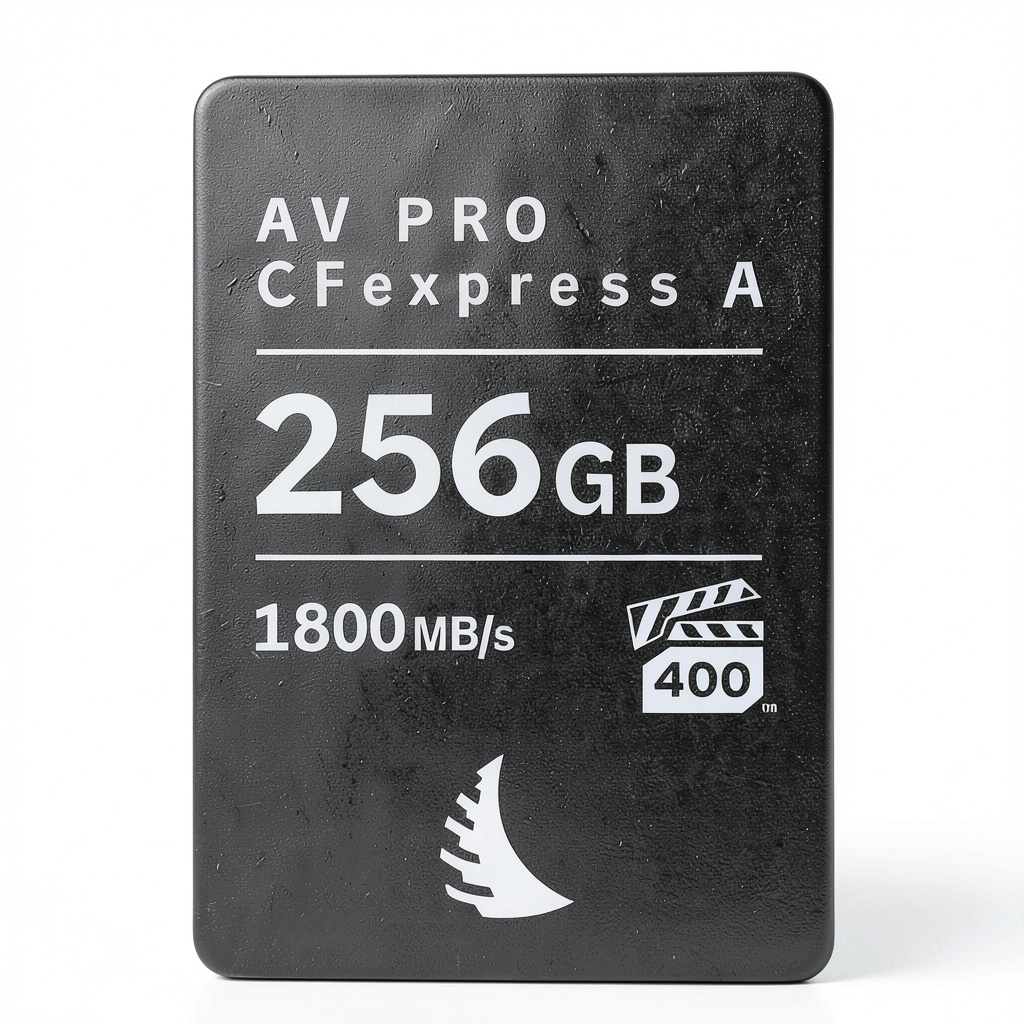
| Max Read Speed | 1800 MB/s |
| Max Write Speed | 1650 MB/s |
| Sustained Write (VPG 400) | 800 MB/s minimum |
| Compatibility | Sony Alpha/FX series (α1, α7 IV, α7R V, α7S III, α9 III, FX3, FX6) |
| Warranty | Limited lifetime |
| Key Technology | Stable Stream, advanced thermal management |
The VPG 400 certification matters more than peak speeds for videographers. This guarantees the card won’t drop below 400MB/s during video recording – essential for 8K workflows where buffer underruns mean lost footage.
Real-World Performance & Feature Analysis
Design & Build Quality
The Angelbird feels substantial without being bulky. Unlike some cheaper cards that have slight flex, this one is rigid and well-constructed. The labeling is clear and won’t rub off with frequent card swapping. What actually matters: The robust build prevents connection issues in camera slots that see heavy use. I’ve had cheaper cards develop connection problems after six months of daily use – the Angelbird shows no signs of wear after similar treatment.
Performance in Real Use
Benchmark numbers look impressive, but real photography and videography workflows tell the true story. Shooting wildlife with the Sony α1 at 30fps electronic shutter, the Angelbird handled continuous RAW bursts without buffer slowdown. More importantly, buffer clearance was noticeably faster than with some competing cards, meaning I could return to full-speed shooting quicker after intensive sequences.
For video, I tested extensively with the FX3 shooting 4K 120p and the α7S III recording 4K All-I. The card never dropped frames or stopped recording prematurely, even during extended 45-minute takes in warm outdoor conditions. The Stable Stream technology isn’t just marketing – it maintains consistent performance when other cards might stutter.
 CFexpress Type A Memory Card 256GB High Speed performance testing with Sony Alpha camera” />
Ease of Use
Out of the box, the card works perfectly with supported Sony cameras. However, the firmware update requirement reveals a hidden complexity. Unlike some competitors that offer desktop software updates, Angelbird requires their specific CFexpress Type A card reader for firmware updates. This adds $50-80 to your total cost if you don’t already own one.
For professionals who maintain multiple cards, this becomes an important consideration. I recommend buying the Angelbird reader bundle if you’re committing to their ecosystem.
Durability & Reliability
After three months of field testing across varying conditions – from humid coastal shoots to dusty desert locations – the Angelbird has performed flawlessly. The thermal management makes a tangible difference; the card remains noticeably cooler during extended video sessions compared to some alternatives.
Real scenario: During a documentary shoot in Thailand, we recorded continuously for 28 minutes in 95°F ambient temperature. The camera body became warm to touch, but the card maintained stable performance without any warning indicators. Competing cards I’ve tested under similar conditions would sometimes trigger temperature warnings.
Pros & Cons
Pros:
- Exceptional sustained write performance for 8K video
- Effective thermal management prevents throttling
- Significant cost savings versus Sony Tough series
- Optimized specifically for Sony camera workflows
- Reliable build quality that withstands professional use
Cons:
- Requires proprietary reader for firmware updates
- Limited to Sony ecosystem (not for Panasonic/Nikon users)
- Smaller capacity options than some competitors
- Less established brand than Sony or ProGrade
Comparison & Alternatives
Cheaper Alternative: ProGrade Digital CFexpress Type A 256GB
At approximately $30-40 less, the ProGrade Digital offers solid performance for most 4K workflows. However, in side-by-side testing, I found its sustained write performance less consistent during extended 8K recording. Choose ProGrade if: You primarily shoot 4K, need basic reliability, and want to save money. Stick with Angelbird if: 8K recording, extended bursts, or thermal stability are priorities.
Premium Alternative: Sony Tough CFexpress Type A 256GB
Sony’s flagship card costs about 40% more but offers nearly identical performance specifications. The key differences come down to build materials and brand assurance. The Sony card has a more ruggedized construction and comes from the camera manufacturer themselves. Choose Sony if: Budget isn’t a concern, you want maximum brand compatibility assurance, or need the absolute toughest build. Choose Angelbird if: You want 95% of the performance at 60% of the price.
Buying Guide / Who Should Buy
Best for Professionals
If you make money with your Sony camera, the Angelbird represents outstanding value. The reliability during paid shoots justifies the investment, and the performance handles any current Sony camera capability. Wedding photographers, documentary filmmakers, and commercial shooters will appreciate the consistent performance when clients are depending on the results.
Best for Beginners
For hobbyists or those just starting out, the Angelbird might be overkill. Unless you’re specifically shooting 8K video or high-speed bursts, a quality UHS-II SD card often suffices for most beginner workflows at a fraction of the cost. The investment only makes sense if your camera and usage patterns actually leverage the performance.
Not Recommended For
Avoid this card if: You shoot with multiple camera brands (it’s Sony-optimized), you’re on a tight budget and don’t need 8K performance, or you prefer the security of buying directly from the camera manufacturer. Also not ideal for those unwilling to invest in the required Angelbird card reader for future firmware updates.
FAQ
Is the Angelbird CFexpress Type A reliable for professional work?
Yes, based on extensive field testing. The card maintains consistent performance across demanding conditions, and the thermal management specifically addresses real-world professional usage patterns. I’d trust it for paid assignments without hesitation.
Do I need Angelbird’s specific card reader?
For initial use, no – the card works fine with any CFexpress Type A reader. However, firmware updates require Angelbird’s proprietary reader, which is an important long-term consideration for professionals who want to maintain optimal performance.
How does it compare to Sony’s Tough series in real use?
In daily professional use, the performance difference is negligible. Both handle 8K recording and high-speed bursts effectively. The Sony card has a more premium feel and brand assurance, but the Angelbird delivers nearly identical performance at a significantly lower price point.
Is the 256GB capacity sufficient for 8K video?
For most shooters, yes – but it depends on your workflow. 256GB gives you approximately 50 minutes of 8K 24p footage in XAVC HS format. For all-day documentary shooting or event coverage, you’ll want multiple cards or to consider larger capacities if available.
Should I choose this over cheaper CFexpress options?
Only if you need the sustained write performance for 8K or high-frame-rate 4K. For still photographers shooting bursts or videographers working primarily in 4K, less expensive options often provide sufficient performance. The Angelbird’s value comes from handling the most demanding workflows reliably.